

Bidirectional charging (V2G): the future of smart charging?
Electric vehicles make transport cleaner, but they can do more than just get you from A to B. Imagine your car not only charging its battery, but also supplying electricity back to the grid when needed. This is known as bidirectional charging, or Vehicle-to-Grid (V2G), a smart technology that could significantly change the way we use energy.
What is bidirectional charging?
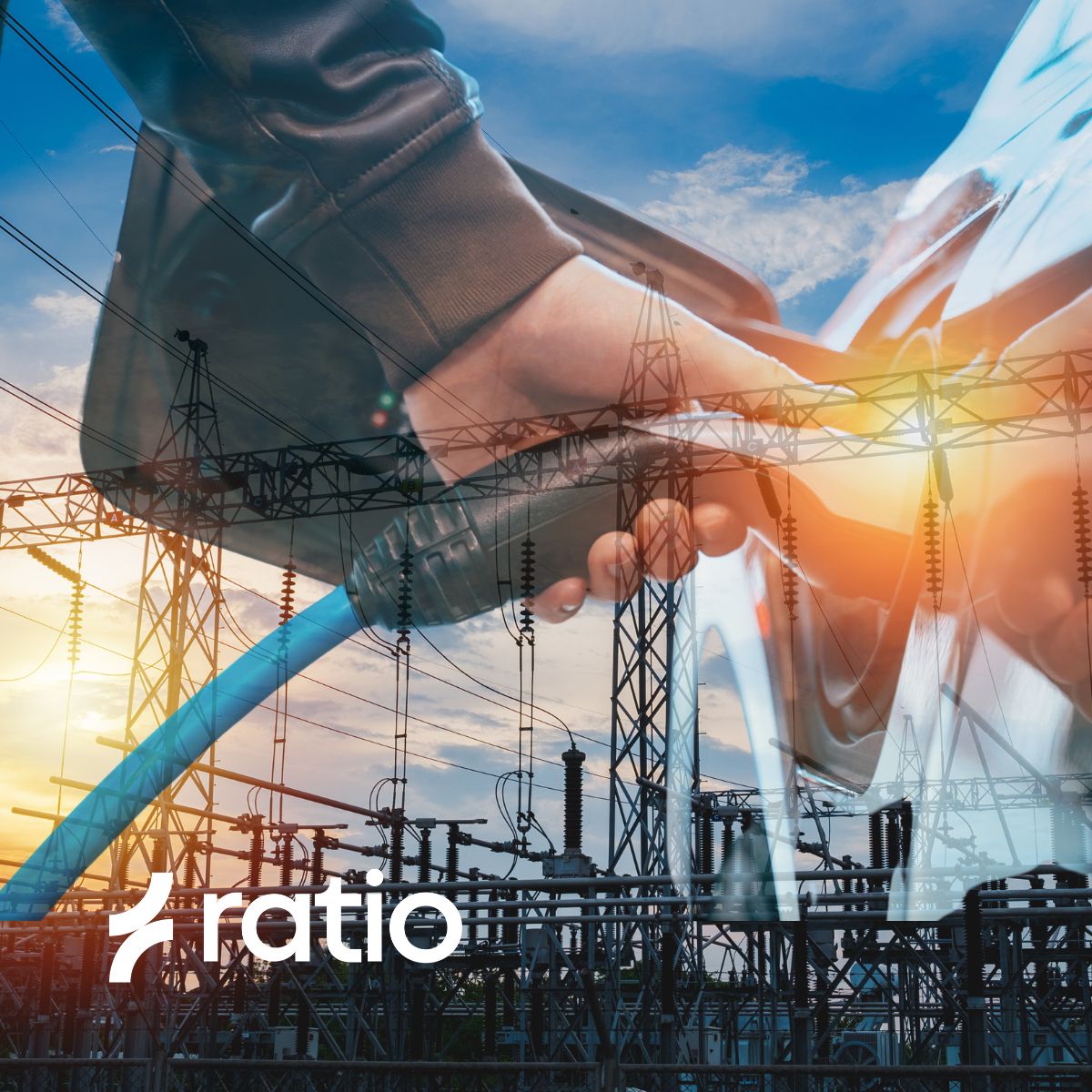
Bidirectional charging means that electricity can flow in two directions: from the electricity grid to your electric vehicle and from your vehicle back to the grid. With a compatible EV and charging solution, your car can effectively act as a mobile battery. It can store electricity when energy is readily available and return it when demand is higher. This can help make better use of renewable energy and contribute to a more flexible electricity system.
Promising, but bidirectional charging is still in its early stages
At Ratio EV, we see the potential of bidirectional charging as a logical next step in the energy transition. The idea of your car acting as a mobile battery and feeding energy back into the grid during periods of peak demand fits perfectly with the concept of a flexible, sustainable energy system - also known as a smart grid.
However, bidirectional charging is far from being the standard Bidirectional charging is still far from being the standard, although the technology is gradually becoming available. The Renault 5 E-Tech electric, for example, already supports V2G, with a commercial V2G service now available to private customers in the Netherlands. Polestar is also making progress: the Polestar 3 already supports bidirectional charging in selected applications, while the Polestar 4 is currently being tested for V2G and V2H functionality. BMW has also taken a major step forward, launching a commercial V2G solution in Germany for the new BMW iX3. Car manufacturers remain cautious because of the additional costs and the potential impact on battery life. There are also no universal standards yet for communication between the vehicle, charging station and grid operator. The technology is promising, but it is still very much under development.
Smart charging is already possible today
At Ratio, we believe in bidirectional charging, absolutely. That is why we develop our charging solutions with the future in mind. But the good news is that you do not have to wait for V2G to start using energy more intelligently. At Ratio Electric, our current focus is on smart charging, also known as V1G, and that already works perfectly today.
Our EV chargers, including our wall-mounted chargers, are ideal for:
- Charging at the right time: With our app, you can easily set a weekly charging schedule based on lower electricity prices or periods of high solar generation. Many electric vehicles can also do this themselves.
- Charging with solar power: Do you have solar panels? You can charge your car when the sun is shining – good for the environment and your wallet.
- Charging with dynamic energy prices: We work with partners that offer dynamic electricity tariffs, giving customers even more control over their EV charging costs.
Ready for tomorrow
Bidirectional charging may still be some way off, but at Ratio Electric we are already looking ahead. Our EV charging solutions are designed with the future in mind. As soon as the technology is more widely supported, by vehicles, grid operators and legislation, we will be ready.
Until then, we focus on smart applications that already deliver benefits today. Because sustainable progress starts now.
AC versus DC in bidirectional charging
There are two main forms of bidirectional charging: AC V2G and DC V2G.
With AC V2G, the conversion from alternating current (AC) to direct current (DC), and vice versa, takes place inside the vehicle itself. This requires an advanced On-Board Charger (OBC), and not every EV is equipped with a bidirectional charger. The advantage is that the charging infrastructure can remain relatively affordable. The disadvantage, however, is that energy transfer can be less efficient.
With DC V2G, electricity flows directly to and from the vehicle battery via the charging station, which acts as the converter. This can be faster and more efficient, but it is also more expensive and technically complex. Most vehicles do not currently support this form of bidirectional charging.
In addition, European Regulations for Generators (RfG) impose strict requirements on feeding electricity back into the grid. These regulations are not yet fully aligned with bidirectional charging. Large-scale V2G adoption will therefore take some more time.
V1G versus V2G: what can you do today?
When discussing smart charging, we distinguish between V1G and V2G.
V1G (also known as unidirectional charging) is the standard today. V1G is smart charging in one direction: your car receives electricity but does not feed it back into the grid. It is simple, works with almost every electric vehicle and fits within current regulations.
V2G takes things a step further by allowing your car to supply electricity back to the grid, but this requires specialised technology that is not yet widely available. For now, V1G already offers significant benefits, including lower charging costs and the ability to make greater use of renewable energy.
Vehicle-to-Grid (V2G) is promising, but it is not yet a reality for most people. V1G – smart charging at the right time – is. And that is where we can already make an impact today, with smart technology, sustainable choices and practical benefits.
With our EV chargers, you are ready for both today and tomorrow. The question is: how smart do you want your charging to be?


